|

|
Dauphin Island, AL
Archive of Historical Data, Books, Maps
And Other Materials
Taken from the front page news
Barrier Beauty,
Between The Sea and The Shore
By KATHERINE SAYRE and BEN RAINES, Staff Reporters
Monday, June 16, 2008
The barrier islands of Alabama and Mississippi have shaped coastal life for generations,
but are disappearing with gathering speed. This 2-day Press-Register series, which concludes
today, chronicles the efforts by state efficacies to get federal funding to rebuild the
islands and explores the natural beauty of the coastal cultural touchstones.
PETIT BOIS ISLAND -- Coming in from the open Gulf, miles before you can
even begin to see land, the island gives itself away.
There on the horizon, bright and white against a naked blue sky, a telltale plume of light
reaches toward the heavens.
The plume is centered over the island, and testifies to the power of our subtropical sun, which
bounces so fiercely off the miles of white sand that it actually casts a sort of reverse shadow,
this one made of light hundreds of feet into the sky. Each island in the Gulf Islands National
Seashore chain casts such a light.
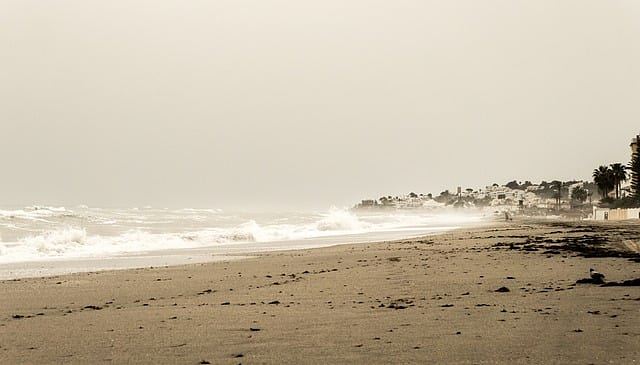
The plume fades as you approach the island, whose eastern edge rises up from the surf as little
more than a sand spit, but two inches above sea level and barren save for a lone black-legged
stilt prospecting in the shallows. In those shallows, dozens of hermit crabs clutch and crawl
across each other, stingrays slide by, and glittering schools of translucent minnows flash in
water less than ankle deep.
Welcome to the barrier islands of Alabama and Mississippi.
The ancient islands, at once both ephemeral and permanent, have stood sentinel for eons, protecting
this portion of the coast from pounding Gulf waves and the worst blows hurricanes can deliver.
The islands also create and preserve the Mississippi Sound, a giant brackish estuary fringed by
marshes, dotted with seagrasses and described by federal officials as the most "fertile" part
of the Gulf of Mexico.
Scientists say the islands are shrinking, even perhaps disappearing, thanks mostly to the impact
of ship channels dredged in the last century. But, in the wake of research conducted in the last
two years, efforts are now under way to save the natural treasures from sinking below the sea forever.
Petit Bois (pronounced "petty boy" in the local vernacular) quickly expands from its skinny
leading edge, with a broad sand flat giving way to a field of low dunes. Step off the boat, the only
way to get to the barrier islands, and chances are good you are the only human being on a completely
uninhabited isle.
People, beginning with the nation's earliest Native American tribes, have likely camped on Petit Bois,
just over the Alabama line, and its neighbors, Dauphin, Horn, Ship and Cat, for 10,000 years.
Save for the odd plastic bottle or broken lawn chair washed ashore, it's easy to imagine that
little has changed since then.
Wander inland and white morning glories stretch across the sand as far as you can see, their
green vines rambling across dunes capped with yellow pencil flower peas. Toward the center
of the island, the dunes flatten out and low grasses take hold. A flat plain of sand stretches
before you, draining toward a lake ringed with marsh grasses, cattails and sea ox-eyes.
The lake holds water more fresh than salt, a welcome oasis to thousands of migratory birds looking
for a first drink after flying across the Gulf from South America.
The lake was long famous for its alligator population, but that was before Hurricane Katrina had
its way with Petit Bois. That storm radically reshaped the barrier island chain as it came
ashore.
Dauphin Island was sliced in half and rendered into two islands. Dunes on Ship and Horn, both
farther west off Mississippi, were flattened.
And Petit Bois, in perhaps the cruelest blow to the barrier islands, lost the very forest that
gave it a name. Petit Bois, in French, means "little forest." And that's what the island had
before it was buried under a 30-foot storm surge, a shady grove of tall pines just large enough
to get lost in. But today the forest is dead, reduced to a stand of giant toothpicks, stark
against the horizon.
Horn Island, which, at about 18 miles long, is as large as Dauphin Island was pre-Katrina, still
has its forest, thanks to higher sand dunes.
On both islands, dwarf live oaks, slash pines and even magnolias still stand tall, home to a
unique group of plants and animals, ranging from one-lined tree frogs to rattlesnakes.
"One of the most fascinating things about barrier islands is they are dynamic. They are in a
constant state of change. They can be enveloped in a storm that alters inlets, lagoons and
shorelines overnight," said John Dindo, a scientist at the Dauphin Island Sea Lab who has
visited the area's islands for 35 years.
"They are unique microcosms of life. They have (freshwater lakes) on them that support all
kinds of life. Petit Bois does. Dauphin Island does. Horn does. That's the key to the diversity.
And the diversity changes as the seasons change."
Dindo highlighted the islands' critical role both as a stopover for migratory birds and as a
nesting ground for shorebirds. He said that with habitats ranging from bare sand flats and
vegetated dunes to freshwater lakes bordering large, berry-filled forests, the islands can
serve up a meal to just about any bird that lands on them.
But the islands serve other masters as well, mostly in the water. It is hard to overstate
the importance of the islands in terms of both fishing destinations for area anglers, and as
fish-producing habitats for sealife.
A net pulled across the flats on the Mississippi Sound side of Petit Bois on June 2 yielded
juvenile file fish, pompano, jack crevalle, mullet and shrimp the size of a fingernail.
Grass beds beginning three feet from shore are home to blue crabs, grass flat crabs,
leopard crabs, grass shrimp, brown shrimp, blowfish, rays, redfish, speckled trout, pinfish,
pipefish, grunt, and on and on.
With shorelines marked by marsh headlands and flowing cuts draining interior lagoons, the
barrier islands serve as one of the key ecological engines powering the northern Gulf Coast's
ecosystem, scientists say. From the ancient Indian Mounds on Dauphin Island to the bold
Horn Island paintings and prints of Mississippi's Walter Anderson, the barrier islands
have remained one of the Gulf Coast's most enduring calling cards, seducing all who
gaze upon them for thousands of years.
© 2008 Press-Register -- © 2008 al.com All Rights Reserved.
|
|