![]() |
|
|
|
|
|
|
"Dauphin Island AL: French Possession 1699-1763" |
With problems constantly plaguing
the colonists, dissatisfaction and discouragement took the form
of more complaints against those in authority. Bienville, as governor,
was the target for blame for mismanagement of the colony, and
for the failure of the Company of the West, even though his voice
of reason and his exhortation for enterprise had often been ignored.
Finally Bienville was recalled to France for investigation into
the complaints. |
On Easter Sunday, 1724, Bienville
arrived at Dauphin Island from New Orleans, preparing to board
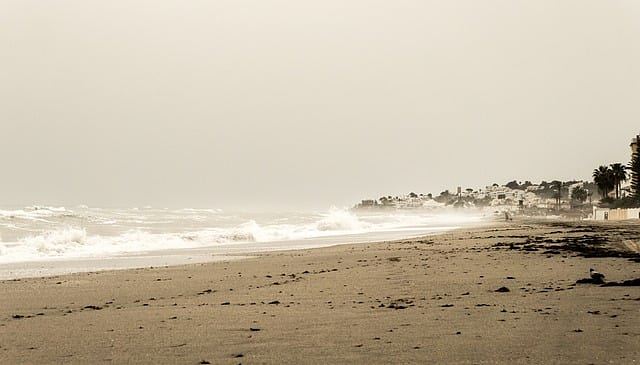
ship for the voyage to France. As he stood on the beach with bags
ready, waiting for the small boat to take him out to the ship
'Bellona', he was horrified to see the ship fire a distress signal
and, before his very eyes, the ship sank. In fair weather, without
warning, the 'Bellona' sank in the bay at the southeast side of
Dauphin Island. Bienville returned to New orleans, where he finally boarded another ship that took him to France. After investigation by the court of King Louis XV, Bienville was cleared of the unjust charges and was again appointed governor of Louisiana, serving until 1742 when he retired to Paris. Until his death at almoist 90 he continued to visit ports in France to meet ships coming from Louisiana for news of the colony. After the capital was moved from Mobile, activity on Dauphin Island rapidly declined. The island was visited often in 1728 by the cure, who also crusaded among the Choctaw indians. Church records show events such as baptisms, marriages, and election of officers over the years, to mid-century. We know that a garrison was maintained on the island many more years, for records from 1742 show that a soldier, Private J.B. Lozier, drowned in a lagoon. In 1762, the Garrison of Massacre was metioned in baptism records of the child of Nicholas Bouvie, a soldier at the post on Dauphin Island, thus marking the last recorded mention of Massacre or Dauphin Island during the time of French possession. The struggle between France and England continued on through the eighteenth century. In 1756, a British fleet blockaded Mobile Bay to stop French trade. The blockade lasted until 1763, the end of the French and Indian War. After years of extravagance by the weak-willed and pleasure-loving King Louis XV, France was on the verge of complete financial collapse and military defeat. Seeing that France would soon lose its holdings on the north american continent, in 1762 King Louis secretly ceded New Orleans and all of Louisiana Territory west of the Mississippi River to his cousin, King Charles of Spain. The treaty of 1763 gave England all of the Lousiana territory east of the Mississippi River, including Dauphin Island and Mobile. King Charles of England created two districts, called East and West Florida, and Dauphin Island became a part of West Florida. In October 1763, Robert Farmar assumed command of Mobile in the name of Great Britain. Most of the French who lived in Mobile withdrew to New Orleans, and the British changed the name of Fort Conde to Fort Charlotte in honor of their queen. In a letter of November 1763 from Major Farmar to Lord Egremont, he said ".....A corporal and six men I have sent to the Island Dauphin to be assisting the Pilot in going off to ships, as the bar is very dangerous, and there are no inhabitants upon the island." Though the occupation by British forces did bring some changes, the names and influence of the 65 year possession of the gulf coast by the French are still very much in evidence. The dreams of Bienville and his brothers, along with many others, linger over the region to remind us of the courage of those Frenchmen who braved the dangers of unknown lands, uncertain provision, hostile Indians, disease, burning sun and horrendous winds to settle a place called Dauphin Island. |
| |
Page designed by: Gulf Information Pages, Dauphin Island, AL |
|