| RALEY'S POND ON DAUPHIN
ISLAND
SOURCE: Dauphin Island Community News
Vol 2, No. 2, Summer 1997
SHORT ISLAND HISTORY LESSON
Editor's note: Following is a copy of a typed memo
from Leon G. Raley to Lindsey Boykin, dated April 12, 1963. The
document was found in archive material at USA..
Sometime ago, Lindsey Boykin confided to me that
he planned to publish a Dauphin Island newspaper. It was his idea
to limit its features content to items of fishing, boating, sailing,
and history of the Island. At that time, I asked him if he knew
how Raley's Pond received its name. He remarked that he didn't know.
I inquired about the possibility of his publishing an account of
this interesting facet of Dauphin Island history and lore. He replied:
"Leon, if the article is acceptable, now only will I publish it
- but, I'll pay you as well."
So I went home to set down the word
picture of how Raley's Pond received its name. For those of you
readers - who are not familiar with the Pond - may I point out that
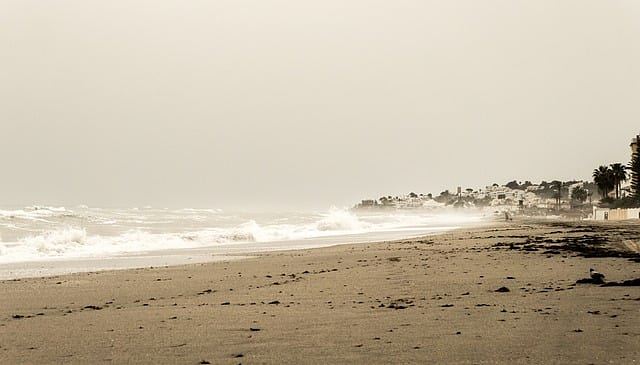
this small body of water (about three acres in size) is situated
about four miles east of the Western end of the Island and empties
into the Sound by means of a small outlet. It is the habitat of
marine life. As a child in the early Thirties, I accompanied my
father and cousin, Earl Raley, to the Pond on a fishing party. It
was there we caught many mullet on a trammel net - an experience
I've never forgotten.
Can you picture Dauphin Island in 1867? Two
years and six months had passed since the end of the War. Confederate
veterans of the Island had returned to their homes to take up life
where it was left. Among these was young Jimpsey David Raley. This
youth of twenty years had been one of the youngest volunteers to
the Southern cause. This year - 1867 - the week before Christmas,
young Jimpsey married the fair maiden - Cecile Terry of Dauphin
Island.
The following year, as family responsibilities grew, the
young bridegroom sought additional ways to supplement his livelihood.
It was this item (1868), that young Raley was found using his ingenuity
and special skills to advantage.
At Fort Morgan, the skilled Raley
was removing pilings and obstacles in the Bay most uniquely. He
dove to the bottom with a hand saw and proceeded to saw the piling
and obstacles. As he would need air, he would surface - get his
breath and then return to the bottom to continue the sawing. Anyone
familiar with the extent of these fortifications will tell you the
feat was amazing.
Too this young man was enterprising enough to
also collect whatever metallic material he found on the bottom in
the way of shell casings and unfired shells. This material was taken
to Dauphin Island and stored with other ammunition left from Fort
Gaines' unwanted arsenal at the western end of the Island.
Upon
Raley's inquiry, a Mobile metals salvage dealer refused to buy the
materiel as it was "LIVE". But this young man was not to be stopped.
He proceeded to eliminate the safety hazard. He started a fire in
the huge stacked stores of ammunition and quickly dug in at a safe
distance to watch the FIREWORKS! One can imagine the huge hole which
resulted from this explosion. After the smoke cleared and the debris
settled, Raley collected the brass and other metals - took it to
Mobile by vessel, and sold it to the junk dealer.
As the years passed,
the tides from the sound caused a small inlet to be formed which
accounts for the Pond's salt water and access. And from that day
to this , the body of water was know to the natives of Dauphin Island
as RALEY'S POND. -Leon G. Raley.
|